
j@mmyj@mes ventures:
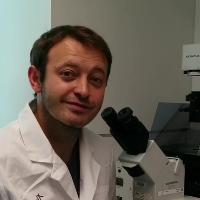
Other than my research I also have a strong interest in commercialization of research discoveries and I have been a keen investor for over a decade. Hence, i decided to launch j@mmyj@mes ventures that is an umbrella term for all my commercialization activity including company development and investing. When investing, I typically utilize a strategy of finding biopharma companies with a major binary event catalyst approaching in combination with calculating the probability of the possible outcomes and the value of those respective outcomes. Using this information i can take what i believe to be an appropriate position in a stock or related derivatives. I decided to offer this strategy to third parties through the two AI leveraged software tools that i have developed in python, Hidden Helix and Serapharm. Hidden helix works by utilizing APIs to scour clinical trials and related information for potential valuable clincial trial related catalysts on the nearterm horizon in the biopharma space (A kind of more specific and better in my opinion version of Bloomberg terminal). Serapharm then helps to choose an investment strategy for those opportunities by working out the probailities of success/failure and the value given success/failure.
More detail:
I generally invest in small cap biotechnology and pharmaceutical stocks since I have a PhD in human genetics and almost 20 years of experience of working in a laboratory and therefore this is the sector for which I have expert knowledge. I try and focus on catalyst time periods in the lifetime of companies with only 1 or 2 drugs in their pipeline, particularly when they are close to announcing the results of their major phase 3 drug trials since this is when company value is most affected. My approach is typically 2 fold:
First I will attempt to value a company using the discounted risk adjusted cash flow method assuming the phase 3 trial either fails or succeeds. This technique I learnt during my time in the molecules2medicine program run by the Victorian government in Australia aimed at teaching researchers how to commercialize their discoveries (A kind of mini-MBA focused on the biotechnology and pharmaceutical industry).
I attempt to calculate the probability that that trial will be successful or fail. Generally I try to define a null hypothesis using previously published data with as similar inclusion/exclusion criteria as possible. Then i will run markov simulations using that null data and any data published on the phase 3 trial and/or earlier phase I/II trials by the company or the treatment and calculate the corresponding statistical test and effect estimation used in the statistical analysis plan by the company (logrank stat test, max-combo test, Hazard ratio/RMST/milestone survival for example).
Though simulations help to elucidate whether a therapy will meet its primary end-point it is still a guessing game. Since I work day in day out with cellular biology and genetics I have a deep appreciation for workable mechanisms of action at the cellular and molecular scale. This deep knowledge I feel gives me an edge when it comes to analyzing the likelihood of success of many of these therapeutics. Based on my analysis described above and my feeling about the potential mechanism of action of the therapeutic I will take an investment position typically using combinations of shares, call and put options. I usually try and bet for the company but sometimes I bet against which helps to hedge my portfolio against general downturns in the sector.
See terms of use tab.